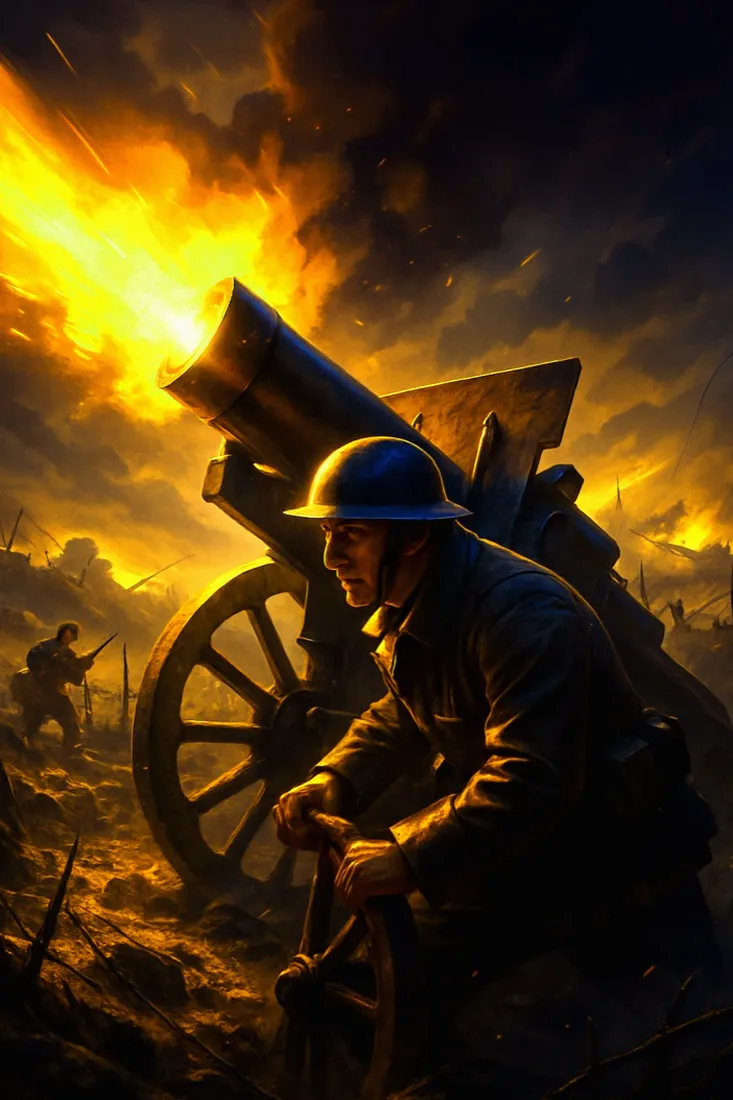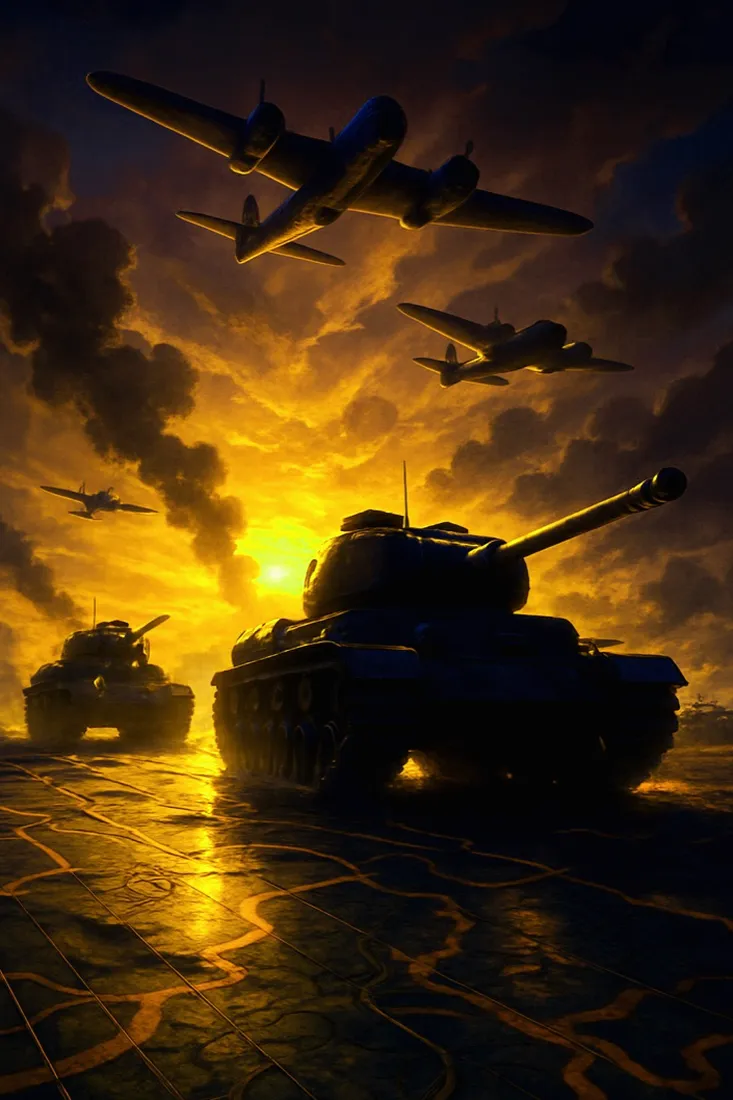
Call of War begins quietly. You choose a nation, look at a map divided into provinces, and realise that every one of those provinces is producing resources whether you are watching or not. Nothing happens in a flash. A tank division ordered towards the border will take hours to arrive, research completes while you are at work, and your rivals are real people setting their own alarms. That slowness is the whole appeal.
We played a full match with a mid-sized European nation and kept a log of every check-in. By the end we had lost a fleet, gained a reliable ally in a player we never spoke to outside the coalition chat, and finished respectably in the top third. It felt less like a session of a game and more like a month spent running a ministry of war in the margins of real life.
Provinces, factories and the slow climb to a war economy
Every province you hold feeds resources into your stockpile in real time, and the choices about what to build in each one shape your entire war. Core provinces are your industrial heart; conquered territory contributes less and can grumble. Early on the decision is mundane but important: do you build up industry for a long war, or rush units to grab neighbouring land before anyone else does? We learned the hard way that a thin economy cannot sustain a big army past the second week.
The interface makes this readable. Hover over a province and you see what it yields, what is under construction and how quickly it is growing. Resource shortages show up as clear warnings rather than mysteries. It is still a game of spreadsheets at heart, but the spreadsheets are attractive and they reward the kind of player who enjoys setting things in motion and coming back later to a factory finished, a road upgraded, a stockpile filled.
A research tree wide enough for two very different wars
The Steam listing promises more than 120 historically inspired units, and the research tree genuinely feels that broad. Infantry, armour, artillery, aircraft and naval units all branch through several levels, and you cannot afford all of them. That forces commitment. Our run leaned on tactical bombers and medium tanks; an ally playing a neighbouring nation went heavy on submarines and destroyers, and between us we covered each other's blind spots very neatly.
Late in a match the tree reaches secret weapons, atomic bombs included, which can feel dramatic if you are on the receiving end. They arrive late and cost a great deal, so they reward long-term planning more than they upset the balance. What we appreciated most was that the cheapest units stay useful throughout: a well-placed anti-tank line built from early research held off an expensive armoured push in our third week.
Real-time movement, and why scouting decides everything
Units move across the map at a real-time pace that reflects terrain and roads, which makes timing the core skill. Ordering an attack is easy; arriving at the right moment with air cover overhead and supply lines intact is the challenge. Fog of war hides enemy stacks until you scout them, so recon aircraft and cheap probing units become precious. Our single worst moment came from marching a full division into territory we had not looked at.
Because battles resolve while you are away, Call of War rewards orders that are robust rather than clever. Grouping units sensibly, setting them to defend chokepoints and staggering arrivals so a defender cannot pick them off one by one all matter more than lightning reactions. You can win battles without ever being online at the moment they happen, which is exactly what makes the game fit around work, school and family.
Alliances, chat and the long finish line
Coalitions are where Call of War comes alive. Allies share vision, coordinate offensives and, crucially, keep each other honest about who is about to turn. The in-game messaging is straightforward, and in our match the coalition chat buzzed with planning from early morning to late evening. A good coalition makes the whole game warmer; a silent one makes it a lonely grind, so pick your partners on activity rather than size.
Every match has a finish line. Victory comes from accumulating victory points or reaching a time limit, which means a campaign that is going badly will still end, and a good run gets a proper conclusion. Premium currency can speed construction and research, and you will notice paying players in the leaderboard, but in our match a disciplined coalition of mostly free players held its own comfortably. Fairness is good, not perfect.
Call of War: the opening offensive
- Pick a nation with a compact border and core provinces close together, so your early defence is simple and your supply lines short.
- Queue industry upgrades in your strongest core provinces before building a large army; the economy you plant now pays for the war later.
- Research one land path and one air path rather than spreading thin across every branch of the tree in the opening days.
- Join a coalition by day two, introduce yourself in the chat, and offer to watch a flank for a neighbour who seems active.
- Build a few cheap scouts and recon aircraft so you never send a full division into a province you have not looked at first.
What we love
- The real-time pace fits around a working day without ever feeling dead.
- A broad tech tree lets two players with the same nation fight differently.
- Matches end on points or time, so every campaign gets a proper conclusion.
- Coalition tools are clear, and good allies make the whole map feel alive.
What grates
- Paying players do show up near the top of the leaderboard in most matches.
- Inactive neighbours can leave easy land that unbalances the early game.
- The first two days feel slow before your economy really gets going.
The general Call of War needs
Anyone curious about grand strategy who wants a Second World War setting and a pace that respects their job. If you enjoy planning a move tonight and seeing it land tomorrow, and you like the idea of a coalition chat buzzing with ideas, this is the campaign to begin with.
Call of War: the after-action report
Call of War is the most complete package on our shelf: a sensible economy, a research tree with real choices, real-time movement that makes scouting and timing matter, and alliances that turn a strategy game into a shared story. The shop is visible but rarely decisive. It earns its top spot by being the game we would hand to a friend first, and the one we kept playing after the review was filed.